
Hygiene Guide · Materials
Nitrile, Latex or Vinyl: Which Disposable Glove Is Right for You?
Published on · by SF Medical / Oriplast GmbH, Neunkirchen, Germany
From the outside, disposable gloves all look much the same. Once you start working, the difference shows quickly: one tears as you pull it on, another fits like a second skin, a third hangs loose at the fingertips. It all comes down to the material. Here you'll find out how nitrile, latex and vinyl gloves differ and which one suits your work.
In short: Nitrile is the best choice for most tasks. Latex gives you the finest sense of touch but is out of the question if you have a latex allergy. Vinyl is the cheapest option and works well for short, light tasks.

Nitrile gloves: tough and latex-free
Nitrile is a synthetic rubber. It contains no natural latex, so people with a latex allergy can wear nitrile gloves too. The material is tear-resistant and holds up well against oils, grease and many cleaning agents.
That's why most doctors' surgeries, care services, labs and kitchens now work with nitrile. They're also standard in workshops and hair salons.
Good to know: nitrile gloves come in different thicknesses. A thin glove with good tactile sensitivity is enough for examinations. For cleaning or workshop jobs, a thicker version is worth it.
Latex gloves: the finest sense of touch
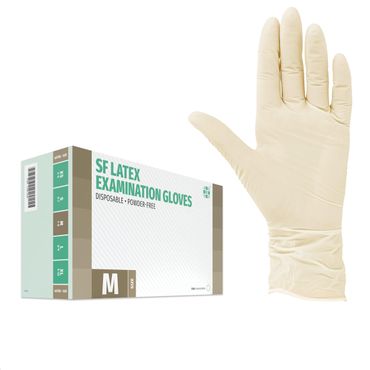
Latex is made from natural rubber. No other material is as elastic. Latex gloves fit snugly and let you feel almost everything you touch, which is why people who work with fine instruments value them so much.
The catch is allergies. Natural latex can cause skin reactions, both in the wearer and in patients or customers. Where lots of people come into contact with the gloves, nitrile is usually the safer choice.
Vinyl gloves: low-cost for short tasks
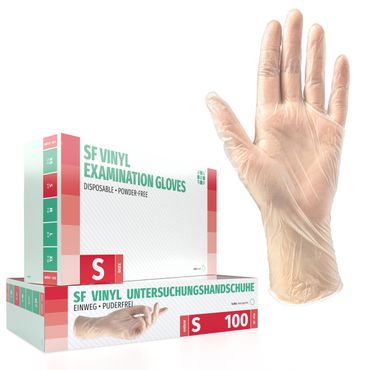
Vinyl gloves are made from PVC. They're latex-free and cost less, but they fit more loosely and barely stretch. Under strain they tear more easily.
They work well when you change gloves after a few minutes anyway: at the checkout, for quick jobs or light cleaning.
Nitrile, latex and vinyl compared
| Nitrile | Latex | Vinyl | |
|---|---|---|---|
| Tear resistance | high | high | low |
| Fit | snug | very snug, elastic | loose |
| Latex-free | yes | no | yes |
| Resistance to oils and cleaners | good | medium | low |
| Price | medium | medium | low |
| Typical use | surgeries, care, labs, kitchens, workshops | surgeries, if nobody is allergic | short, light tasks |
Which glove for which job?
- Doctors' surgeries and care: nitrile. Look for medical gloves tested to EN 455.
- Kitchens and catering: nitrile approved for food contact, marked with the glass-and-fork symbol.
- Cleaning and workshops: thicker nitrile gloves.
- Checkout and quick tasks: vinyl.
- Household: nitrile, or vinyl if you'd rather save.
Frequently asked questions
Are nitrile gloves better than latex gloves?
Not in every respect. Latex is slightly more elastic and gives you a finer sense of touch. Nitrile is latex-free and stands up better to oils and cleaning agents. For most jobs, that makes nitrile the more practical choice.
Which disposable gloves are suitable for a latex allergy?
Nitrile and vinyl gloves. Neither contains natural latex.
Why are vinyl gloves cheaper?
PVC costs less to produce than nitrile or latex. In return, vinyl gloves stretch less and tear more easily.
Our recommendation: when in doubt, go for nitrile
If you only want to keep one type in stock, choose nitrile. It covers you in the surgery, the kitchen and at home. Latex is worth it when every detail of touch matters and nobody has an allergy. Vinyl is the budget option for short jobs.
Not sure which thickness or size you need? We're happy to advise you personally, Monday to Friday from 8 am to 4 pm (CET), on +49 6821 8047 or by email at kundenservice@oriplast.de.
Matching gloves in our shop
Nitrile gloves · Latex gloves · Vinyl gloves
Need larger quantities for your practice or business? Request a bulk quote